
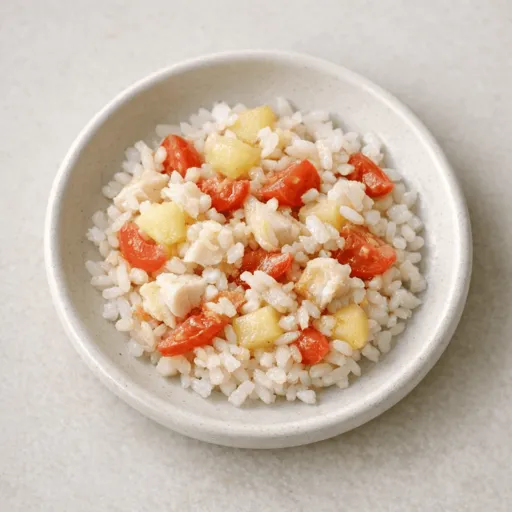
Cod, Potato, Tomato and Rice
From 12 months · 4 foods
Ingredients
How to prepare each food
Cod
Serve flaked cod as a soft table food in bite-size pieces. Keep it cooked through and boned, and continue to favor fish from the lower-mercury group.
Bite-size soft flakes, bones removed.
Hidden bones are the main hazard. Run your fingers through every piece and remove each bone before serving, since even fine fish bones can be sharp.
Potato
Cooked potato can be served in bite-size soft pieces closer to family texture. Mashed, soft roasted chunks, or small cubes all work; keep it cooked soft, low on salt, and the pieces small.
Bite-size soft pieces or small cubes, kept small.
Cook potato until soft; raw or undercooked potato is hard. A very sticky, gluey mash can cling to the mouth, so loosen it or serve a fluffier texture. Keep pieces small and watch as your baby eats.
Tomato
Serve bite-size pieces of soft ripe tomato. Cherry and grape tomatoes still keep their round shape, so keep quartering them lengthwise into small pieces; do not offer them whole or simply halved.
Bite-size soft pieces; cherry/grape tomatoes still quartered lengthwise.
Cherry and grape tomatoes are a classic choking shape: whole or halved, they can block a small airway. Always quarter them lengthwise into small pieces, and keep doing so until about age 4. Peel and de-seed larger tomatoes, since the skin can bunch up while chewing.
Rice
Serve rice as part of family meals, mixed into soft vegetables, beans, meat, or sauce. Your toddler can eat it with a spoon or hands. Keep rotating in other grains and keep salt low.
Loose soft grains, mixed into other soft foods. No cutting needed.
Putting it together
Cook the cod with the tomato and potato, then serve over the rice.

Cook with Lumi
In the nappi app, Lumi joins you in the kitchen. Chat about any recipe: adapt it to what you have at home, swap an ingredient, or ask questions while you cook.
Chat with Lumi in the appSources11
- Meal idea from NHS
- AAP - Starting Solid Foods (around 6 months)
- NHS - What to feed your baby from around 6 months
- FDA/EPA - Advice about eating fish (mercury and best low-mercury choices)
- AAP - Introducing common food allergens to your baby
- USDA FoodData Central - Cod (nutrient data)
- USDA FoodData Central - Potato (nutrient data)
- AAP - Choking prevention guidance for infants and toddlers
- CDC - Foods that are choking hazards for infants and toddlers
- USDA FoodData Central - Tomato (nutrient data)
- FDA - Arsenic in rice and rice products
General informational content, not medical advice. Always consult your pediatrician about introducing new foods, especially if your baby has any medical conditions or family history of allergies.
See this meal for your baby's age
Get prep for your baby's exact age, track what you've introduced, and plan the week. Free to try.