
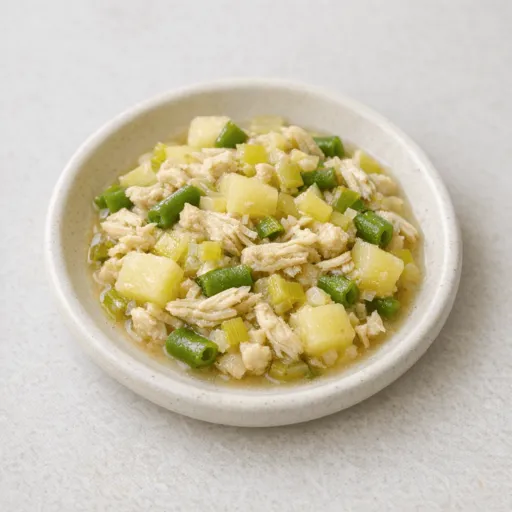
Chicken, Leek, Potato and Green beans
From 10 months · 4 foods
Ingredients
How to prepare each food
Chicken
As the pincer grasp develops, offer soft fine shreds or finely chopped chicken as a finger food, or small soft meatballs. Keep it fully cooked and moist, with no added salt, and avoid tough or large chunks.
Fine shreds, small soft pieces, or broken-up meatballs.
Leek
Keep leeks cooked very soft and finely chopped, stirred into mashes, omelets, or rice. As your baby picks up small pieces, small soft pieces of well-cooked leek work, as long as they are chopped short so the fibers do not string together.
Small soft pieces of well-cooked leek, chopped short.
Leeks have long fibers that can string together. Cook them until very soft and chop them short rather than serving them raw or in long strips.
Potato
Offer soft-cooked potato in small pieces as the pincer grasp develops. Keep it cooked until fork-tender; a sticky, gluey mash can cling to the mouth, so a fluffier mash or small soft cubes are easier.
Small soft cubes, about ½ inch, or a fluffy mash.
Cook potato until soft; raw or undercooked potato is hard. A very sticky, gluey mash can cling to the mouth, so loosen it or serve a fluffier texture. Keep pieces small and watch as your baby eats.
Green beans
Keep cooking green beans until soft, just a touch firmer is fine now that the pincer grasp is developing. Offer small bite-size pieces alongside other soft foods.
Small soft pieces, about 1.25 cm, or short thin strips.
Whole green beans can stay firm and stringy if undercooked. Cook them until very soft and, for younger babies, cut lengthwise into thin strips or small pieces so nothing is round or tube-shaped.
Putting it together
Cook the chicken with the leek, potato and green beans into a soft stew.

Cook with Lumi
In the nappi app, Lumi joins you in the kitchen. Chat about any recipe: adapt it to what you have at home, swap an ingredient, or ask questions while you cook.
Chat with Lumi in the appSources7
General informational content, not medical advice. Always consult your pediatrician about introducing new foods, especially if your baby has any medical conditions or family history of allergies.
See this meal for your baby's age
Get prep for your baby's exact age, track what you've introduced, and plan the week. Free to try.