
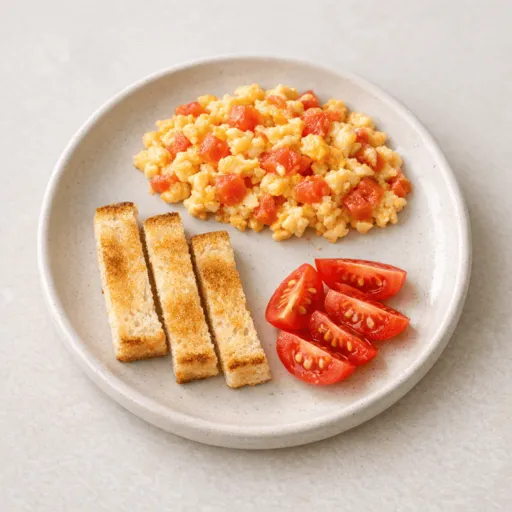
Egg, Bread and Tomato
From 7 months · 3 foods
Ingredients
How to prepare each food
Egg
Hard-cook the egg until both white and yolk are solid, then mash it smooth, or offer a well-set scramble or a soft omelet. A small amount, about a third of an egg, is plenty for a first taste.
Serve as a smooth mash, soft scramble curds, or finely chopped omelet strips.
Bread
Lightly toast bread so it holds together, then cut it into finger-width strips your baby can grip. Toasting helps it firm up instead of turning gummy in the mouth. Most bread contains wheat, so introduce it on its own and watch for a reaction. Choose lower-salt bread when you can.
Finger-width strips of lightly toasted bread. Avoid soft, untoasted bread that can ball up into a gummy wad.
Soft, fresh bread can compress into a sticky wad that is hard to clear, and hard crusts can break off in firm pieces. Toast it lightly, cut it into strips or small pieces, add a thin moist spread, and always supervise eating.
Tomato
Choose a ripe, soft tomato. Peel off the skin (it can bunch up and be hard to chew), scoop out the seedy core, and mash the flesh or stir it into a purée. If offering a piece to hold, give a soft finger-length strip of peeled flesh. Cherry and grape tomatoes are a round choking shape, so always quarter them lengthwise into small pieces and never serve them whole or halved.
Peeled, mashed, or a soft finger-length strip; quarter cherry/grape tomatoes lengthwise.
Cherry and grape tomatoes are a classic choking shape: whole or halved, they can block a small airway. Always quarter them lengthwise into small pieces, and keep doing so until about age 4. Peel and de-seed larger tomatoes, since the skin can bunch up while chewing.
Putting it together
Prepare each ingredient using the age guidance above, then serve them together.

Cook with Lumi
In the nappi app, Lumi joins you in the kitchen. Chat about any recipe: adapt it to what you have at home, swap an ingredient, or ask questions while you cook.
Chat with Lumi in the appSources10
- Meal idea from NHS
- AAP - Starting Solid Foods (around 6 months)
- NHS - What to feed your baby from around 6 months
- AAP - Introducing common food allergens to your baby
- USDA FoodData Central - Egg (nutrient data)
- AAP - Choking prevention guidance for infants and toddlers
- CDC - Foods that are choking hazards for infants and toddlers
- ESPGHAN 2017 - Complementary feeding position paper (gluten and allergen timing)
- USDA FoodData Central - Bread (nutrient data)
- USDA FoodData Central - Tomato (nutrient data)
General informational content, not medical advice. Always consult your pediatrician about introducing new foods, especially if your baby has any medical conditions or family history of allergies.
See this meal for your baby's age
Get prep for your baby's exact age, track what you've introduced, and plan the week. Free to try.