
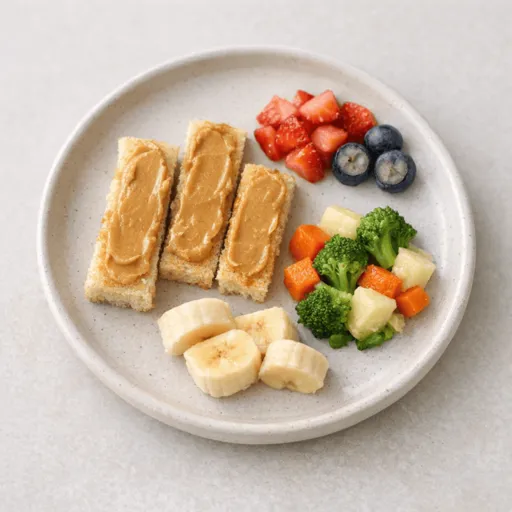
Bread and Peanut butter
From 12 months · 2 foods
Ingredients
How to prepare each food
Bread
Bread can be a regular part of meals as toast fingers, small sandwich pieces, or soft pieces with a topping. Toasting still helps with very soft bread, and crusts can usually stay on. Avoid thick or sticky toppings and keep limiting salt.
Toast fingers or small soft pieces. Keep toppings thin and moist; avoid large gummy bites of soft bread.
Soft, fresh bread can compress into a sticky wad that is hard to clear, and hard crusts can break off in firm pieces. Toast it lightly, cut it into strips or small pieces, add a thin moist spread, and always supervise eating.
Peanut butter
Spread a thin layer of smooth peanut butter on soft toast strips, soft fruit, or mix it into porridge and sauces. Thick blobs and chunky peanut butter are still a choking risk; keep it thin or thinned.
No pieces. Thin spread or thinned into food; no thick blobs or chunky butter.
A thick spoonful or blob of peanut butter is a choking hazard because it is sticky and can coat the throat. Always thin it with water, breast milk, formula, or a purée, or spread a very thin layer on a soft food. Whole peanuts and chunky peanut butter are not safe before about age five.
Putting it together
Prepare each ingredient using the age guidance above, then serve them together.

Cook with Lumi
In the nappi app, Lumi joins you in the kitchen. Chat about any recipe: adapt it to what you have at home, swap an ingredient, or ask questions while you cook.
Chat with Lumi in the appSources11
- Meal idea from American Academy of Pediatrics
- AAP - Starting Solid Foods (around 6 months)
- NHS - What to feed your baby from around 6 months
- AAP - Choking prevention guidance for infants and toddlers
- CDC - Foods that are choking hazards for infants and toddlers
- ESPGHAN 2017 - Complementary feeding position paper (gluten and allergen timing)
- AAP - Introducing common food allergens to your baby
- USDA FoodData Central - Bread (nutrient data)
- NIAID 2017 - When and how to introduce peanut to infants
- LEAP study - early peanut introduction reduced allergy risk by ~80% in high-risk infants
- USDA FoodData Central - Peanut butter (nutrient data)
General informational content, not medical advice. Always consult your pediatrician about introducing new foods, especially if your baby has any medical conditions or family history of allergies.
See this meal for your baby's age
Get prep for your baby's exact age, track what you've introduced, and plan the week. Free to try.