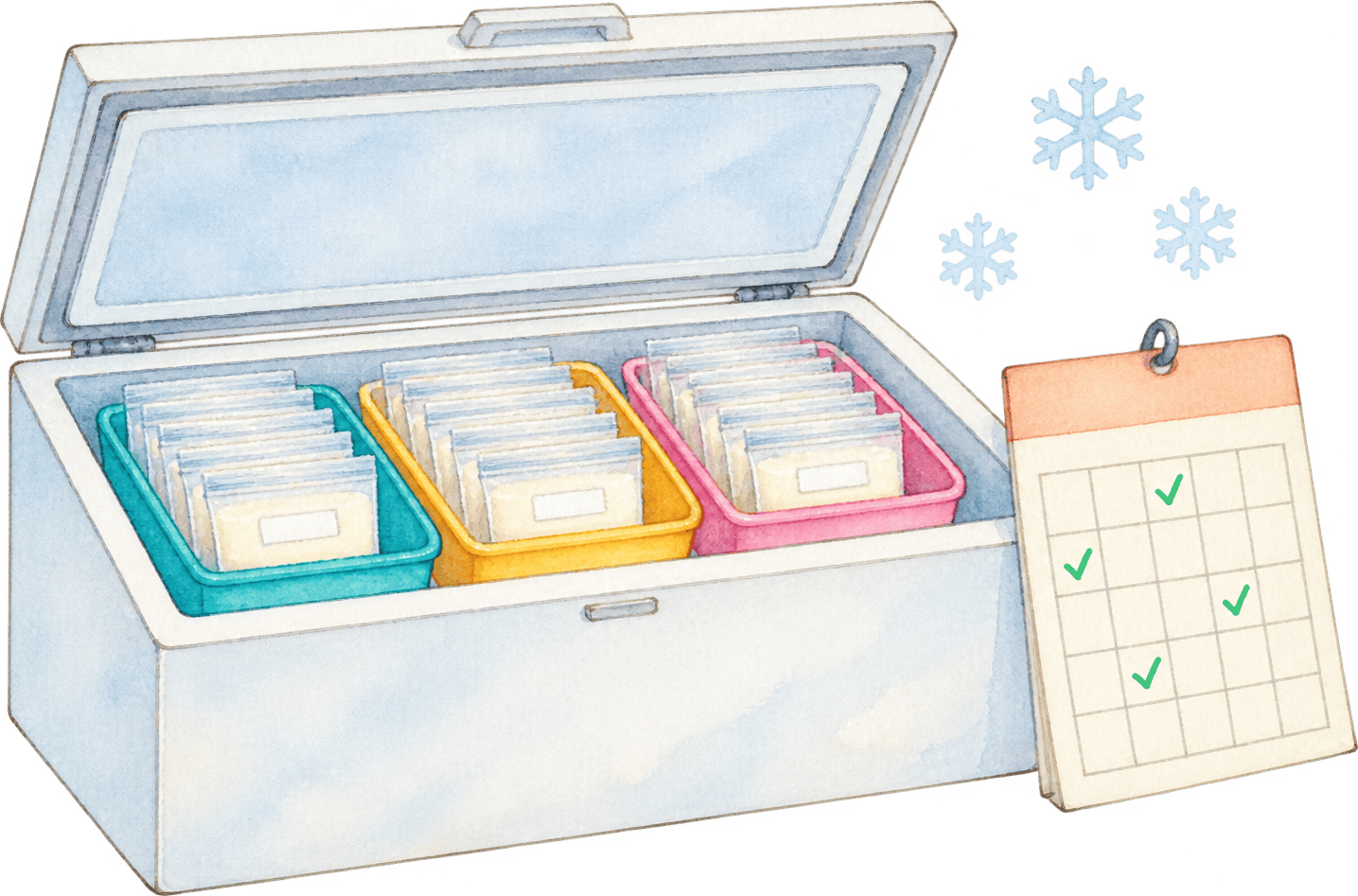
You've seen the photos. A chest freezer packed wall to wall with flat bags, captioned with something like "ready for daycare!" Then you look at the dozen bags in your own freezer drawer and wonder whether you're already behind.
There's no single right size for a stash. The amount you need is the stored milk your baby drinks each day while you're apart, multiplied by the number of days the stash has to cover, minus what's already in the freezer. And if you plan to keep pumping at work, that number is usually much smaller than the photos suggest, because each day's pumping feeds the next day's bottles and the freezer only covers the gaps.
The stash math in one line
Stash needed = stored milk per day apart × days to cover − milk already stored
Each part of that line depends on your own baby and your own plan, which is why a number from someone else's freezer won't tell you much. The breast milk stash calculator does this math in its "Stash goal" tab, and it also tells you how much extra to store each day between now and your first day back.
How do I figure out how much stored milk my baby drinks a day?
Use your baby's own bottles. Babies drink different amounts, and the number that matters here is specific to yours.
Count only the milk that comes out of the stash. If you nurse before you leave and again when you get home, those feeds don't touch the freezer. What counts is the bottles a caregiver gives while you're gone.
The easiest way to get the number is to log a few typical days of bottles and take the average. One day can mislead you (a growth-spurt day, a sleepy day), so three or four days give a steadier figure.
Not giving bottles yet? A practice day or two with someone else doing the bottles before you go back shows the real amount, and it doubles as a trial run for everyone.
Check the number again every few weeks. The amount your baby drinks from bottles can change over the months, and the stash math changes with it.
How many days does the stash need to cover?
That depends on what happens after you go back. There are two common plans, and they lead to very different freezers.
You'll keep pumping at work. Many parents do this. Milk you pump on Monday becomes Tuesday's daycare bottles, so the freezer isn't feeding your baby every day. It covers the first day back, plus the days your pumping falls short, like a meeting that runs long or a sick day.
You'll stop pumping, or there's a stretch with no pumping. Then the stash is the whole supply for that period, and it has to cover every day your baby needs stored milk.
Count days apart, not calendar days. If you're home on weekends and nursing, those days don't come out of the stash.
A worked example (with made-up numbers)
The numbers below are invented to show the math. Use your own baby's amounts, not these.
Say your baby drinks about 4 bags' worth of stored milk on a day you're apart, and you'd like 10 workdays in the freezer as a buffer.
| Step | Math | Result |
|---|---|---|
| Milk to cover | 4 bags × 10 days | 40 bags |
| Already in the freezer | 12 bags | |
| Still to store | 40 − 12 | 28 bags |
| Days until your first day back | 28 days | |
| Extra to store each day | 28 bags ÷ 28 days | 1 bag a day |
How big a buffer feels right is a personal call. Some parents are comfortable with a few days because they pump at work every day. Others want weeks, maybe because their job makes pumping unpredictable.
Do I need a huge freezer stash if I keep pumping at work?
Usually not. When you pump at work, the freezer is the backup. A small stash used oldest-first, topped up by what you pump each day, can carry a family a long way.
A huge stash has a cost too: every bag has to be pumped, bagged, labeled and stored, on top of the feeds you're already doing. If the numbers say a modest buffer covers your plan, a modest buffer is enough.
Can a big stash go bad before you use it?
It can, and this is the part people don't think about until they find a bag dated last winter.
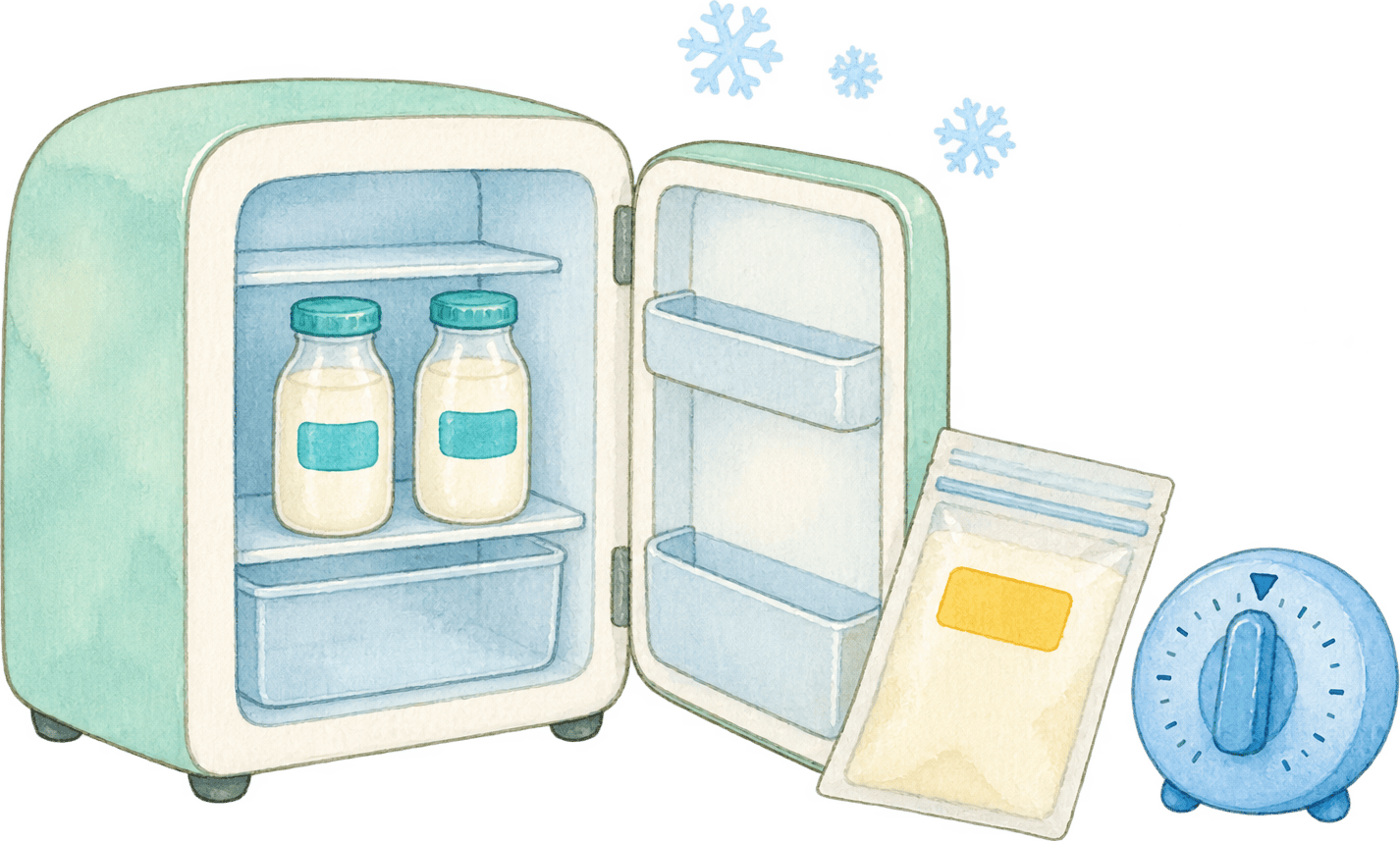
These are the CDC's storage times for freshly pumped milk:1
| Where | How long |
|---|---|
| Fridge | Up to 4 days |
| Freezer | About 6 months is best, up to 12 months is acceptable |
| Thawed in the fridge | Within 24 hours of fully thawing |
The CDC says to thaw the oldest milk first, to start the 24 hours when the milk is completely thawed (not when it leaves the freezer), and never to refreeze milk after it has thawed.1
The milk you freeze first is the milk your baby drinks first. So a stash you start building very early, meant to cover many months, can push the oldest bags past the 6-month mark or even the 12-month limit before they're used. The calculator warns you when that would happen.
Milk you'll use within 4 days doesn't need to be frozen at all. The CDC suggests freezing freshly pumped milk right away only if you don't expect to use it within 4 days.1 If you pump at work for tomorrow's daycare bottles, the fridge is fine.
Storing milk so less of it goes to waste
A few habits from the CDC's guidance make a stash last longer and waste less:1
- Freeze small amounts: 2 to 4 ounces (about 60 to 120 ml), or the amount offered at one feeding.
- Label every bag with the date it was pumped. For daycare, add your child's name and ask the provider about any other labeling rules they have.
- Keep milk at the back of the fridge or freezer, not in the door, where the temperature swings every time it opens.
- Leave about an inch of space at the top of the container, because milk expands as it freezes.
Small bags matter more than they seem. A top-up bottle that needs a little milk shouldn't mean thawing a big bag and pouring half of it away a day later.
For keeping track of what's in the freezer once you have a stash, our post on how to track a breast milk stash covers the day-to-day side, and the feeding guide covers bottle feeding by age. Planning months of milk rather than a buffer? See how to build a 6-month freezer stash, and for every storage time in one place, our breast milk storage guidelines.
Frequently Asked Questions
How much breast milk do I need for the first day of daycare?
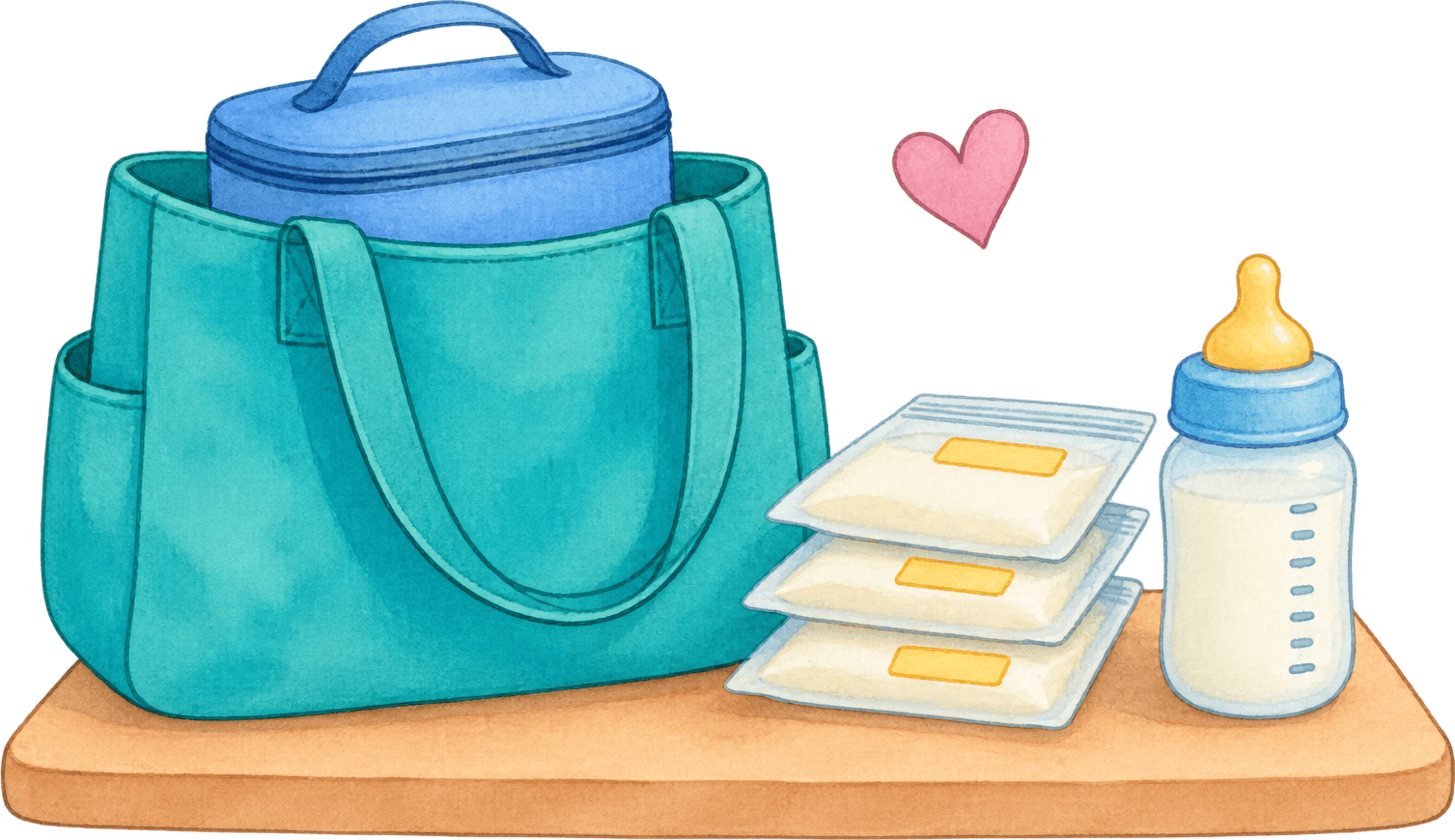
At least what your baby drinks from bottles on a typical day apart. Many parents send a spare bag as well, in case a bottle gets spilled or the day runs long. Ask the daycare how they want milk labeled and stored, since providers have their own rules.
Is a small freezer stash enough if I pump at work?
Often, yes. If what you pump each workday covers the next day's bottles, the freezer only has to handle the shortfalls. How many days of buffer feels comfortable is up to you.
How long can my work stash stay in the freezer?
According to the CDC, frozen breast milk is best within about 6 months and acceptable up to 12 months.1 Use the oldest bags first so none of them sit at the back past that window.
Can daycare refreeze milk that thawed but wasn't used?
No. The CDC says thawed breast milk should never be refrozen. Milk thawed in the fridge should be used within 24 hours of fully thawing.1
Start with a few days of bottle logs, plug your baby's number into the stash calculator, and you'll know whether you need a freezer full or a single drawer. If you want somewhere to keep the bags straight, logging each bag and seeing its use-by date is free in nappi.
References
1. Centers for Disease Control and Prevention. "Breast Milk Storage and Preparation." Link