The head wobble is mostly gone. Your baby holds their head steady when you hold them upright, tracks you across the room, and gives real smiles that show up the moment you walk in. Those newborn weeks where they melted into your arms like a warm loaf are behind you.
Three months sits between two checkups your pediatrician cares about, the 2-month visit and the 4-month one. There's no formal milestone checklist for this exact month, so the honest way to think about it is a bridge: your baby has grown past most of the 2-month skills and is warming up for the 4-month ones. Here's what that looks like in practice, grouped the way a pediatrician sees it, with the numbers and sources behind each part.
What should a 3-month-old be doing?
Most 3-month-olds hold their head steady when upright, push up on their forearms during tummy time, coo and gurgle back at you, and smile on purpose to get your attention.1 These are the skills babies build in the stretch between the 2-month and 4-month checkpoints. The CDC frames its milestones as things about 75% of babies can do by a given age, not the average, so a wide spread of timing is still completely normal.2
Pediatricians watch four rough tracks maturing together. Here's each one at 3 months.
Movement and physical development
Steady head control. Held upright, your 3-month-old keeps their head up on their own without the bobbing of the newborn weeks.1 This is the foundation everything else builds on, from sitting to reaching.
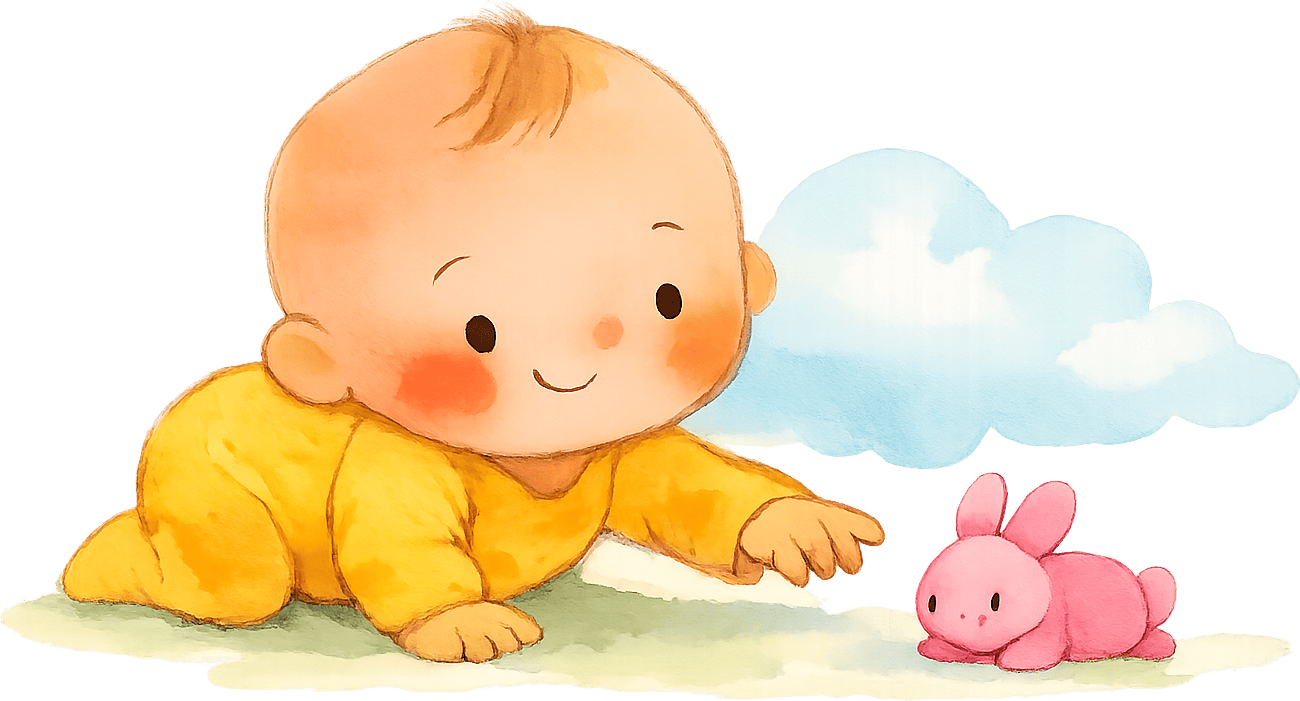
Pushing up on forearms. During tummy time your baby now props on their elbows and lifts their chest, taking in a much bigger view of the room.3 The minutes of tummy time you've been logging are paying off in neck and shoulder strength.
Early rolling, for some. A handful of babies start rolling from tummy to back late in the third month, though plenty wait another month or two.3 If it hasn't happened, that's expected, not late.
Once any sign of rolling shows up, stop swaddling. A swaddled baby who rolls onto their stomach can't push up or turn their head to clear their airway, so the arms need to be free for sleep.4 If your baby is still swaddled and showing no rolling yet, you have a little time, but this is the month to plan the transition out.
Hands and fine motor skills
Hands opening up. The tight newborn fists are relaxing. Your baby's hands are open much of the time now, and they'll study their own fingers with real interest.1
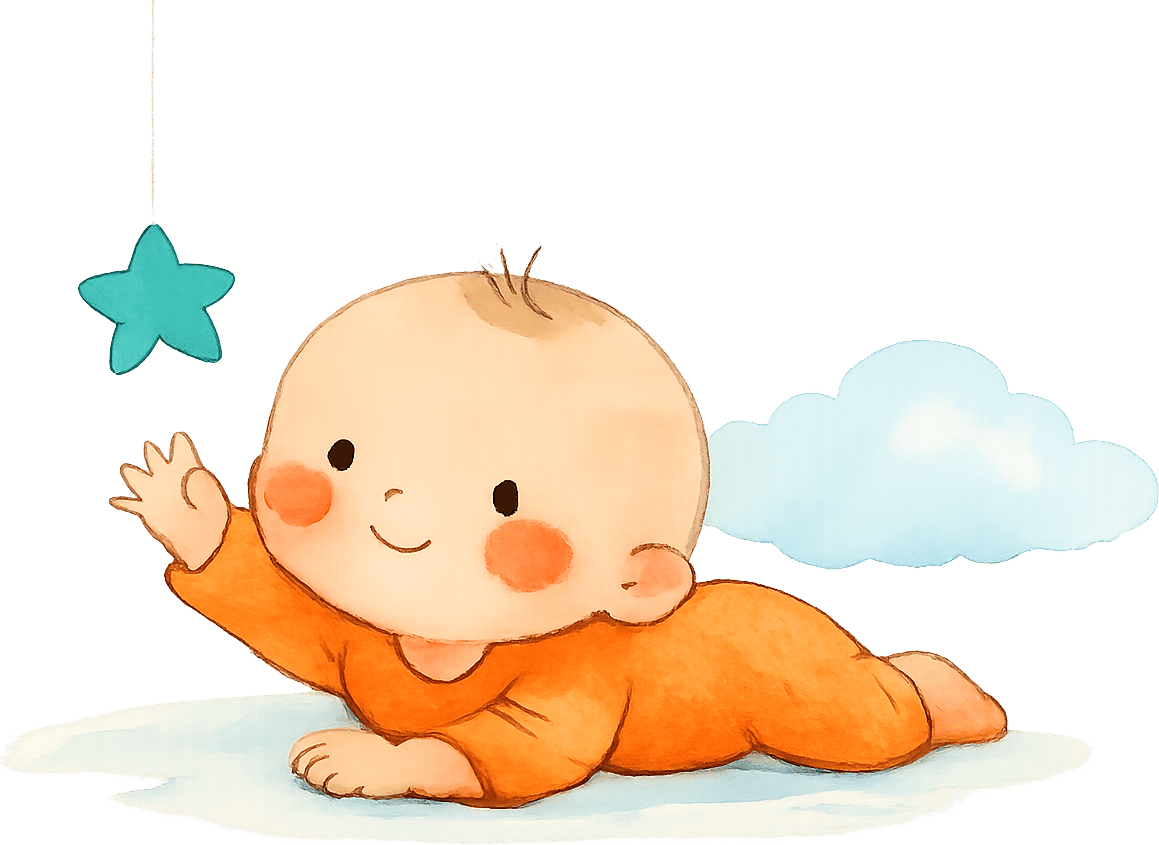
Batting at toys. A 3-month-old swings at a dangling toy on purpose and sometimes connects.3 The aim is rough, but the intent is new, and it's the start of reaching.
Bringing hands together. Babies this age discover their two hands can meet in the middle, and they'll clasp them or bring both to their mouth. Mouthing hands is normal exploration at this stage, not a sign of hunger or teething.
Speech and language
Cooing and gurgling. Your baby makes open vowel sounds, "oooh" and "aaah," often aimed right at your face.5 These coos are the raw material speech is built from.
Taking turns. Coo at your baby and pause, and they'll often "answer" with a sound of their own.5 That back-and-forth rhythm is the scaffolding of conversation, months before any real words.
Early laughs. Somewhere around now, many babies let out their first real chuckle or laugh, usually at something ordinary like your face doing something silly.1
Social and emotional
Social smiles. By 2 months most babies smile back when you smile at them, and by 3 months that smile is a reliable social tool your baby uses to pull you in.1
Enjoying face-to-face play. A 3-month-old is genuinely good company. They lock eyes, brighten when you lean in, and prefer your face to almost anything else in the room.1
Knowing their people. Your baby recognizes the faces and voices they see most and often calms to a familiar voice before you're even in view.1
How much sleep does a 3-month-old need?
About 15 hours in 24, roughly 10 at night and 5 across four naps.6 Wake windows land near 2 hours, shortest before the first nap of the day and a touch shorter again before bedtime, which usually falls somewhere in the 7:30 to 9:00 PM window at this age.
Heads up: the 4-month sleep regression often starts a little early, anywhere from about 3.5 months on, as your baby's sleep cycles reorganize from newborn-style to a more mature pattern. If naps suddenly fall apart or night wakes multiply, that's likely what you're seeing. We walk through the full day, a sample schedule, and how to ride out the regression in our 3-month-old sleep schedule post, and the awake-time numbers for every age live in our wake windows chart.
Feeding a 3-month-old
It's still all milk. Breast or formula covers everything your baby needs, and solids are a conversation for around 6 months, not now.7
Most 3-month-olds take 6 to 8 feeds a day. Overnight the stretches are lengthening, and many babies now go 4 to 6 hours between night feeds, with 1 to 3 feeds still typical before morning. If daytime feeds are getting cut short because your baby keeps stopping to look around (the world got interesting this month), that lost intake can show up as extra night waking.
Our feeding guide breaks down amounts and frequencies by age.
Growth at 3 months
Weight gain is still fast in the first few months, though it's beginning to ease off the newborn pace. This month most babies add somewhere around a pound and a half and grow close to an inch, with many on track to roughly double their birth weight over the next several weeks.8 More or less than that is normal.
At the 4-month visit your pediatrician will plot weight, length, and head circumference against the WHO growth standards.9 What matters is the curve your baby follows over time, not any single percentile. A baby tracking steadily along the 25th percentile is growing exactly as they should.
3-month milestone checklist
Development is a range, not a timetable, and no two babies hit every item the same week. Most 3-month-olds can:
- Hold their head steady when held upright
- Push up on their forearms during tummy time
- Open their hands and bring them together
- Bat at a dangling toy
- Coo, gurgle, and take turns with sounds
- Smile on purpose to get your attention
- Enjoy face-to-face play and recognize familiar people
- Laugh or chuckle (some babies, a little later)
3-month red flags: when to call the doctor
Almost every baby is on their own clock, but a few signs around this age are worth raising with your pediatrician. Check in if your baby1:
- Isn't holding their head up at all when on their tummy
- Doesn't respond to loud sounds
- Doesn't watch you or things as they move
- Isn't smiling at people
- Can't bring their hands to their mouth
- Seems unusually stiff or unusually floppy
- Has lost a skill they clearly had before
No single item on its own means something is wrong, and you know your baby better than any checklist. If something feels off, the "act early" move is to ask sooner rather than wait and see.2
Ways to support development at 3 months
Talk through the day. Narrate what you're doing during diaper changes, walks, and feeds, and leave gaps for your baby to coo back. That call-and-response is exactly how early language grows.
Keep tummy time short and frequent. A few minutes several times a day beats one long, cranky session. This is the strength that leads to rolling and, later, sitting.
Give the hands something to swing at. A dangling toy or a play gym over the floor turns batting practice into reaching practice, and it buys you a few minutes too.
nappi keeps feeds, sleep, and milestones in one place, so when the 4-month visit rolls around you can glance at what actually happened instead of trying to remember it.
Frequently Asked Questions
Is it normal that my 3-month-old isn't rolling yet?
Completely. Rolling from tummy to back shows up for some babies late in the third month, but plenty don't roll until 4 or 5 months.3 Strong head control and pushing up on the forearms are the signs to watch for now. The rolling follows.
Why is my 3-month-old suddenly sleeping worse?
You may be seeing the early edge of the 4-month sleep regression, which can start around 3.5 months as sleep cycles mature. It's developmental, not a setback. Our 3-month-old sleep schedule post covers what's happening and how to handle it.
Should my 3-month-old be laughing?
Many babies produce their first real laugh around this age, but the exact week varies a lot.1 If your baby is cooing, taking turns with sounds, and smiling at you socially, the language and social pieces are on track, and the laugh usually turns up soon.
Can I start solids at 3 months?
No. Milk (breast or formula) is all your baby needs right now, and the AAP points to around 6 months for starting solids, once the readiness signs are there.7 Feeding earlier doesn't help sleep and isn't recommended.
How much should a 3-month-old weigh?
There's no single right number. Most babies gain around a pound and a half this month and are heading toward roughly double their birth weight in the coming weeks.8 Your pediatrician cares about the curve your baby follows on the WHO growth chart, not one weigh-in.9
References
1. Centers for Disease Control and Prevention. "Milestones by 4 Months." Learn the Signs. Act Early. CDC
2. Zubler JM, Wiggins LD, Macias MM, et al. "Evidence-Informed Milestones for Developmental Surveillance Tools." Pediatrics. 2022;149(3):e2021052138. PubMed
3. American Academy of Pediatrics. "Movement Milestones: Babies 4 to 7 Months." HealthyChildren.org. HealthyChildren
4. Moon RY, Carlin RF, Hand I; AAP Task Force on Sudden Infant Death Syndrome. "Sleep-Related Infant Deaths: Updated 2022 Recommendations." Pediatrics. 2022;150(1):e2022057990. PubMed
5. American Academy of Pediatrics. "Language Development: 4 to 7 Months." HealthyChildren.org. HealthyChildren
6. Paruthi S, Brooks LJ, D'Ambrosio C, et al. "Recommended Amount of Sleep for Pediatric Populations: A Consensus Statement of the American Academy of Sleep Medicine." J Clin Sleep Med. 2016;12(6):785-786. PMC
7. American Academy of Pediatrics. "Starting Solid Foods." HealthyChildren.org. HealthyChildren
8. American Academy of Pediatrics. "Ages & Stages: Baby." HealthyChildren.org. HealthyChildren
9. World Health Organization. "Child Growth Standards." WHO